

Credit card FAQ
Straight, jargon-free answers to the credit card questions Canadians actually ask — from CVV codes and credit scores to points expiry, foreign transaction fees and interest.
Credit card basics
What is a CVV (card verification value)?
The CVV is the short security code that proves you physically have the card during online or phone purchases. On Visa and Mastercard it's the 3-digit number on the back, in or beside the signature panel. On American Express it's a 4-digit number printed on the front, above the card number.
Where is the CVV on a debit card?
On most Canadian Visa Debit and Debit Mastercard cards, the CVV is the 3-digit code on the back, to the right of the signature strip. Not every debit card has one — only those enabled for online purchases. Treat it like a password: only enter it with the merchant at checkout.
What is the outstanding balance on a credit card?
Your outstanding balance is the total you currently owe — purchases plus any interest, fees, cash advances and amounts carried from previous months. It differs from your statement balance, which is what you owed as of your last statement date. Paying the full statement balance by the due date avoids interest.
What's the difference between statement balance and current balance?
The statement balance is what you owed on your statement's closing date; pay it in full by the due date to avoid interest. The current balance is your real-time total, including purchases made after the statement closed. To stay interest-free you only need to pay the statement balance.
How do I dispute a credit card charge in Canada?
First contact the merchant — many errors are fixed directly. If that fails, call your card issuer using the number on the back of the card to file a dispute or chargeback, ideally within 30–60 days of the statement. Provide details and receipts; the issuer investigates and can reverse the charge if it's an error or fraud.
What's the difference between a charge card and a credit card?
A credit card lets you carry a balance month to month (paying interest on the unpaid portion) up to a set credit limit. A charge card generally must be paid in full each month and often has no preset spending limit. Several American Express cards are charge cards.
Credit scores in Canada
What is a good credit score in Canada?
Canadian credit scores range from 300 to 900. Generally, 660–724 is good, 725–759 very good, and 760+ excellent; below about 660 is fair or poor. A score of 660 or higher opens up most rewards cards, while the best premium cards favour scores in the 700s.
How can I check my credit score for free in Canada?
You can get your score free from services like Borrowell and Credit Karma, and many Canadian banks now show it in online banking. You're also entitled to a free credit report from Equifax and TransUnion. Checking your own score is a 'soft pull' and never hurts your credit.
What's the difference between Equifax and TransUnion in Canada?
Equifax and TransUnion are Canada's two main credit bureaus. Each keeps its own record of your credit history and score, and because not all lenders report to both, your score can differ slightly between them. It's worth monitoring both, since a card issuer may check either one.
Rewards, points & cash back
Do Scene+ points expire?
Scene+ points don't expire as long as your account stays active. They're typically forfeited only after 24 consecutive months with no activity (earning or redeeming), or if you close the linked account. Occasional use keeps them safe.
Do Aeroplan points expire?
Aeroplan points don't expire as long as you have qualifying activity — earning or redeeming at least once every 18 months keeps the account active. Holding an eligible Aeroplan credit card generally counts as ongoing activity, which prevents expiry.
Do WestJet dollars expire?
WestJet dollars don't expire while your WestJet Rewards account is active and in good standing. They can be forfeited after extended inactivity or if the account is closed, so earning or redeeming periodically keeps them valid.
What are Aventura points worth?
CIBC Aventura points are typically worth around 1 to 1.5 cents each, depending on how you redeem. You get the most value booking travel through the CIBC Rewards Centre, and less for merchandise or statement credits. As a rule, travel redemptions beat cash-equivalent ones.
Is cash back or points better?
Cash back is simpler and never loses value, making it the better choice for most people. Points and miles can deliver more per dollar — often 2 cents or more — but only if you redeem them well, usually for travel. If you won't optimize redemptions, cash back usually wins.
Fees & interest
What is a foreign transaction fee?
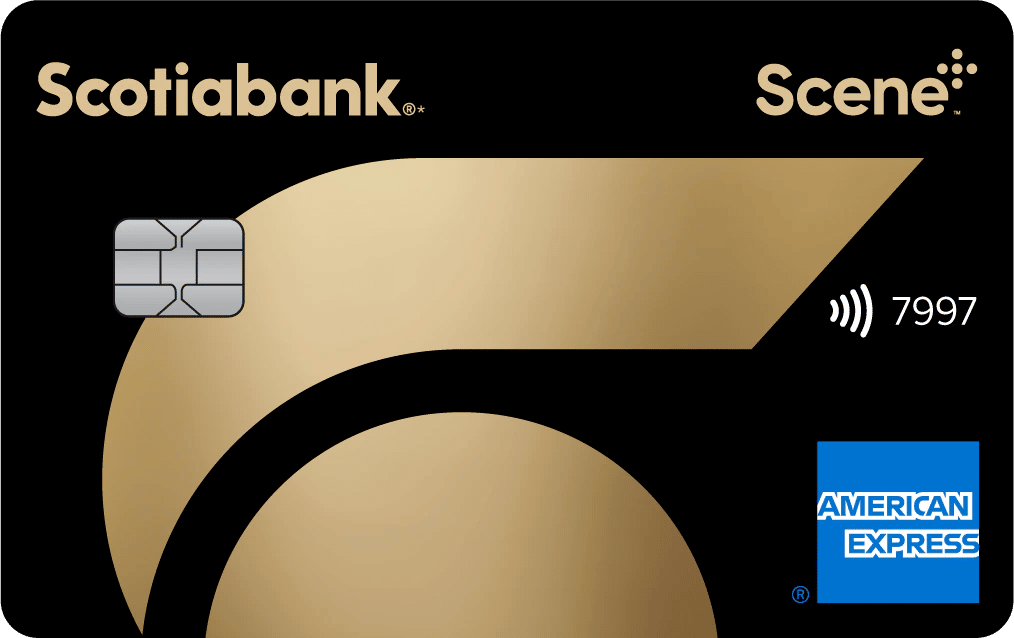
A foreign transaction fee is a surcharge — usually 2.5% in Canada — added to any purchase made in a currency other than Canadian dollars, including many online orders from foreign retailers. A few cards, like the Scotiabank Passport and Scotiabank Gold Amex, waive it, which adds up for travellers and cross-border shoppers.
How is credit card interest calculated?
If you pay your statement balance in full by the due date, you pay no interest thanks to the grace period. If you carry a balance, interest (around 20% per year for most cards) is charged daily on your average balance, and you usually lose the grace period on new purchases until you're paid off. The simplest way to avoid interest is to always pay in full.
What is the minimum payment on a credit card?
The minimum payment is the smallest amount you must pay by the due date to keep the account in good standing — often about $10 or a small percentage of the balance, whichever is greater. Paying only the minimum keeps you current but lets interest pile up, so aim to pay the full statement balance.
What is a credit card grace period?
The grace period is the window — typically at least 21 days — between your statement date and payment due date during which new purchases don't accrue interest, provided you pay the statement balance in full. Carry a balance and you generally forfeit the grace period until the card is paid off.
Ready to find your card?
Put the theory into practice — compare every card in Canada or let our calculator do the math.