


Does the Walmart Rewards Mastercard Beat a Cash Back Card?
The Walmart Rewards Mastercard pays 3% at Walmart and 1% everywhere else. We ran the break-even maths: Walmart has to be about half your card spending before it beats a flat 2% cash back card.

Nicole Reynolds
Senior Rewards Analyst · August 21, 2026 · 9 min read
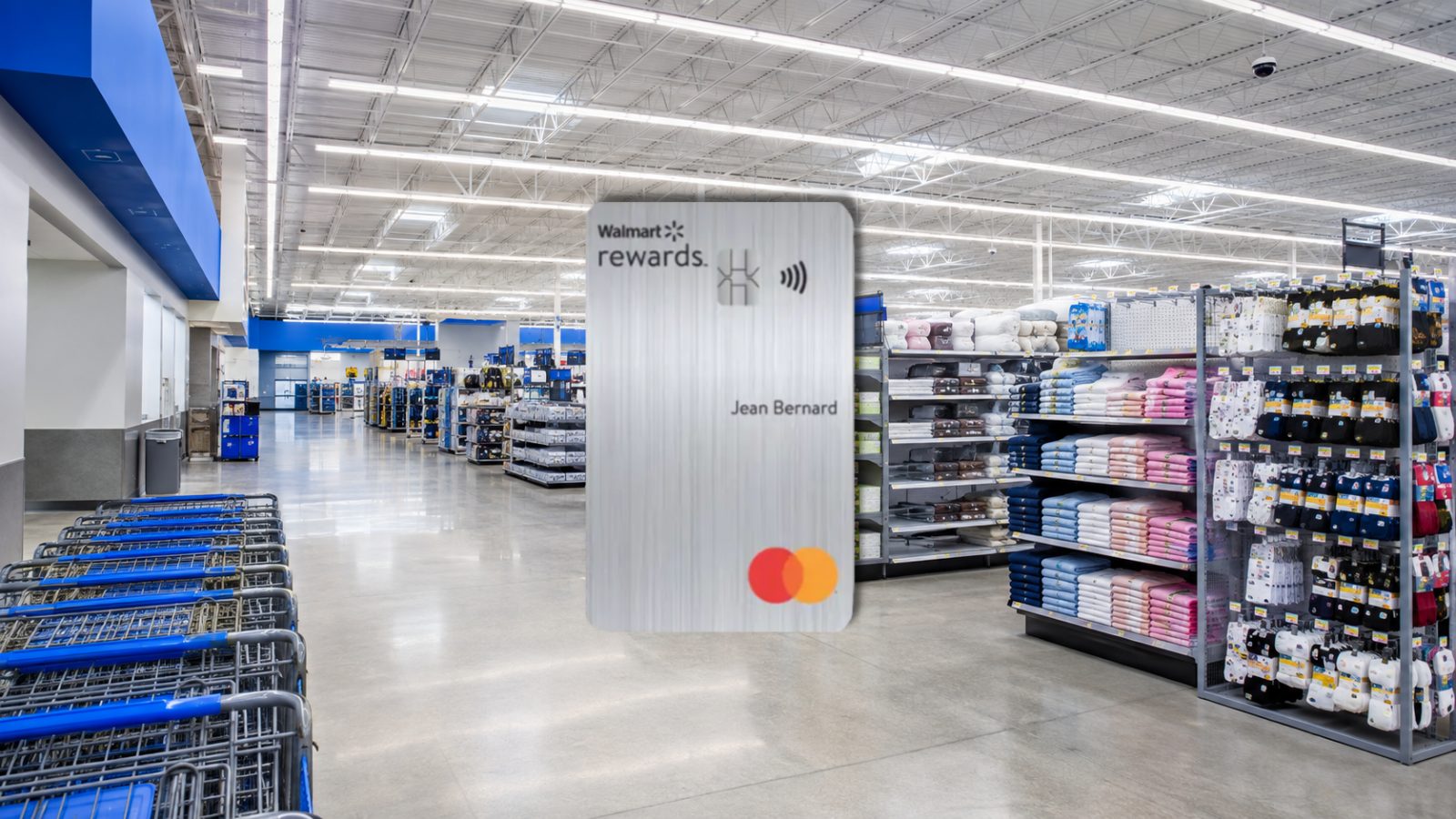
The Walmart Rewards Mastercard pays 3% at Walmart and 1% everywhere else. Whether that is good depends entirely on one ratio: how much of your card spending happens at Walmart. There is a number where it flips, and most people are on the wrong side of it.
Every review of this card lists the earn rates and stops. That is not the question people are asking. The question is: I shop at Walmart anyway — is this better than the no-fee cash back card already in my wallet? That is a subtraction problem, and it has an answer.
The short answer
Against a flat 2% cash back card, Walmart has to be about half of everything you charge before this card wins. Against a 1.5% card, about a quarter. Below those lines you are paying for the privilege of 3% at one shop by taking 1% everywhere else.
Here is where that comes from. Against a 2% card you gain 1% on what you spend at Walmart (3% instead of 2%) and lose 1% on everything else (1% instead of 2%). Equal gain, equal loss — so they cancel when your Walmart spending equals all your other spending combined. That is half your total.
Against a 1.5% card the gain is bigger and the loss is smaller: you pick up 1.5% at Walmart and give up 0.5% elsewhere. It takes three dollars of other spending to cancel one dollar at Walmart, so the crossover lands at a quarter of your total.
The break-even table
Assume $30,000 a year on the card in total, which is roughly $2,500 a month. The only thing changing across the rows is how much of that lands at Walmart.
| Spent at Walmart | Walmart card | Flat 2% card | Flat 1.5% card | Best option |
|---|---|---|---|---|
| $1,000 | $320 | $600 | $450 | The 2% card, by $280 |
| $2,500 | $350 | $600 | $450 | The 2% card, by $250 |
| $5,000 | $400 | $600 | $450 | The 2% card, by $200 |
| $7,500 | $450 | $600 | $450 | Ties the 1.5% card |
| $10,000 | $500 | $600 | $450 | Beats 1.5%, still loses to 2% |
| $15,000 | $600 | $600 | $450 | Ties the 2% card |
| $20,000 | $700 | $600 | $450 | The Walmart card, by $100 |
$15,000 a year at Walmart is around $1,250 a month in one shop. That is a large household doing groceries, clothing, household goods and prescriptions in the same place. It is not impossible. It is not most people.
The ratio is what matters, not the totals. If you charge less overall, the dollar gaps shrink but the crossover points do not move: half your spending against a 2% card, a quarter against a 1.5% one.
Full terms are on the Walmart Rewards Mastercard page.
What it actually earns
Two rates, no categories, no caps published. Walmart Canada relaunched the programme in September 2025 and the structure is deliberately simple.
- 3% on Walmart purchases — in store, on walmart.ca, and including Marketplace sellers
- 1% everywhere else Mastercard is accepted
- $25 in Walmart Reward Dollars as a welcome bonus for new cardholders
- No annual fee
Rewards accrue as Walmart Reward Dollars. They never expire, and you redeem them instantly at the register or at checkout on walmart.ca. There is no minimum and no waiting for a statement credit, which is genuinely better than most retail programmes.
The catch nobody prices in
Reward Dollars only spend at Walmart. A dollar of cash back from a 2% card pays your credit card bill, your rent, or anything else. A Walmart Reward Dollar buys something at Walmart.
If you were going to spend that money at Walmart regardless, the two are equivalent and the lock-in costs you nothing. If you would not have, it is worth less than face value — you are being nudged into a purchase to realise a reward you have already earned. Nobody can put a precise discount on that, so the table above does not try. Just know that at the break-even line the two options are not actually equal: same money, less freedom.
Who issues it, and why your rate is not the advertised one
The card is issued by Fairstone Bank of Canada, not one of the big five. This is the part every other review skips, and it changes two things.
The first is approval. Fairstone is a consumer lender, and lenders outside the big banks typically work with a wider band of credit profiles. If your file is thin or bruised, that is a genuine advantage. If you want big-bank service and a banking relationship, it is a genuine drawback. Both are true.
The second is your interest rate, and it is the most useful thing on this page. There are two rate tiers, and which one you get is decided at approval — not by you. The cardholder agreement sets them out:
| Tier | Purchases | Cash advances | Adjusted rate |
|---|---|---|---|
| Preferred Rate Card | 21.99% | 22.99% | 26.99% |
| Standard Rate Card | 26.99% | 27.99% | 29.89% |
Your approval letter and your statement say which one you have. The Standard Rate Card is not offered to Quebec residents. A five-point gap is not a rounding error — on a $2,000 balance carried for a year it is roughly $100 in extra interest, which is more than the card's entire annual reward for most people.
Which makes the real rule for this card simple: it is a card for people who clear the balance every month. Carry a balance on the Standard tier and the rewards are theoretical.
What we could not verify
This matters more than it sounds. The foreign transaction fee is not published in the cardholder agreement — the agreement confirms one is charged and defers the figure to a separate Disclosure Statement. We are not going to print an industry-standard guess next to figures we actually checked, so we have left it out entirely. Ask before you use this card abroad or on a US website.
We also could not find a published minimum income or credit score requirement, and Walmart does not currently advertise a separate "World" tier of this card. If you have seen one referenced elsewhere, it is likely describing the pre-relaunch programme.
Who should get it
Get it if Walmart is genuinely your main shop — the household doing a large weekly grocery run plus clothing, cleaning and pharmacy in the same trip, clearing the balance monthly, happy to spend rewards there. At $15,000 a year at Walmart you match a 2% card; above that you are ahead, with no annual fee and instant redemption at the till.
Get it as a second card if you already carry a strong everyday card and you simply want the extra 2% on the Walmart portion. Put Walmart on this card, everything else on the other one, and the maths above stops applying — you are only collecting the upside. This is the version that makes sense for most people who want it.
Who should not
- You want one card that does everything. At 1% off-Walmart it is one of the weaker no-fee earners in Canada, and using it as your everyday card is how you end up behind.
- You carry a balance, particularly on the Standard tier at 26.99%.
- You value flexible rewards. Cash back that pays your bill is worth more than store credit, even at identical headline rates.
- Your reasoning is "it's free, so why not". A card is a hard inquiry, a new credit line and another statement to watch. Free is not the same as costless.
Better alternatives for most people
If the break-even table put you on the wrong side of the line, these are the comparisons worth running. All are no annual fee.
A card paying a flat rate on everything is the honest benchmark here, because it needs no thought and no category management. A card paying 2% in categories you choose can beat both if your spending is concentrated — but only if Walmart codes into the category you picked, which is not guaranteed and is worth checking on your own statement before you rely on it.
You can run your own numbers rather than trusting ours in the rewards calculator, or browse the full list of best cash back credit cards in Canada and no annual fee cards.
We have no affiliate relationship with this card. We earn commission on some cards on this site, disclosed on every page that carries one; this is not one of them, and nothing here is worth anything to us either way. Our rating methodology explains how the score is arrived at.
Frequently asked questions
Is the Walmart Rewards Mastercard worth it?
Only if Walmart is a large share of your card spending, or you use it purely as a second card for Walmart purchases. Against a flat 2% cash back card you need roughly half your spending at Walmart to break even; against a 1.5% card, about a quarter.
Who issues the Walmart Mastercard in Canada?
Fairstone Bank of Canada. It is not issued by one of the big five banks, which can mean a wider range of credit profiles are approved, and a different service experience from a bank you already deal with.
Does the Walmart Rewards Mastercard have an annual fee?
No. The cardholder agreement states plainly that the card has no annual fee, on either interest rate tier.
How much does the Walmart Rewards Mastercard earn?
3% on Walmart purchases in store and on walmart.ca including Marketplace, and 1% on everything else. New cardholders also receive $25 in Walmart Reward Dollars as a welcome bonus.
Do Walmart Reward Dollars expire?
No. Reward Dollars do not expire and there is no minimum redemption. You can apply them instantly at the register in a Walmart store or at checkout on walmart.ca.
Where can you spend Walmart Reward Dollars?
At Walmart only — in store or on walmart.ca. They are not cash and cannot be applied to your statement balance, which is the main way this card differs from a straight cash back card at the same headline rate.
What interest rate does the Walmart Rewards Mastercard charge?
It depends on which tier you are approved for. The Preferred Rate Card charges 21.99% on purchases and 22.99% on cash advances. The Standard Rate Card charges 26.99% and 27.99%. Your approval letter and monthly statement say which one applies.
Can you use the Walmart Mastercard anywhere?
Yes, it works anywhere Mastercard is accepted. The point is the earn rate away from Walmart is 1%, which is low enough that most no-fee cash back cards will beat it on that spending.
Is the Walmart Mastercard hard to get approved for?
Fairstone does not publish a minimum credit score or income requirement. As a retail card from a lender outside the big five, approval standards are generally more accommodating than a premium bank card, but we cannot state a range that the issuer has not published.
Is there a Walmart Rewards World Mastercard?
Walmart does not currently advertise a separate World tier. The two tiers that exist today are interest rate tiers — Preferred and Standard — not different rewards products. References to a World version elsewhere are likely describing the programme before its 2025 relaunch.